
Advice,
practiced slowly.نصائح
Field notes from the desert garden — water, soil, shade, summer survival, and the small acts that keep a garden alive between visits.

The discipline of the
morning watering.
The hour before sunrise is worth more than three at noon. By 6am, the soil is at its coolest. Water now and the roots drink deep before the sun begins to take it back.
Watering at noon is a kindness misplaced — most of what you give will evaporate before it reaches the root zone. Watering at sunset invites fungus on damp leaves through the still warm night. The morning hour is the only honest one.
The morning
ritual.
Four small acts, every day from May through September. Twenty minutes, before coffee. The garden will tell you what it needs if you ask it at the right hour.

Walk the garden.
Before any tool, walk. Look at the soil colour. Press a finger an inch deep. The hand knows more than the calendar.
Drip, never spray.
Spray loses 40% to evaporation. A drip line at the base, slow and patient, gives the roots what the leaves can't drink.
Mulch the bare soil.
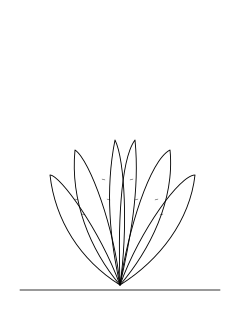
A finger-thick layer of palm-fibre mulch holds water for an extra day. Refresh weekly. The garden floor should never feel hot.

Stop. Sit. Look.
The last act is observation. The garden in early light is its own reward. Note one thing in a small book. Tomorrow, it will be different.
A watering
schedule.
By plant, by season. Dubai has only two seasons that matter to a garden — the cool months and the burning ones. Water accordingly.
By season
| Plant | Frequency | Volume per watering | Note |
|---|---|---|---|
| Ghafغاف | None — established | — | Rains only. Do not water. |
| Date Palmنخيل | Once / 14 days | 200 L | Deep flood at base. |
| Bougainvilleaجهنمية | Once / week | 8 L | Less is more — stress brings flowers. |
| Frangipaniفرنجيباني | Once / 10 days | 10 L | Dormant. Withhold mostly. |
| Hibiscusالكركديه | Twice / week | 6 L | Mulch to retain. |
| Aloeصبار | Once / month | 2 L | Wait until soil is bone dry. |
| Mint, Herbsالنعناع | Daily | 1 L per pot | Best season — grow generously. |
Sand is not soil,
but it can be.
The standard Dubai garden begins with builder's sand — beautiful, sterile, and nearly useless for growing anything but cactus. The fix is patient amendment.
40% local sand
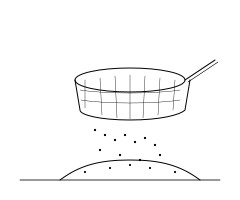
Already in your garden. Sieve out gravel and construction debris. The base of every bed.
30% compost
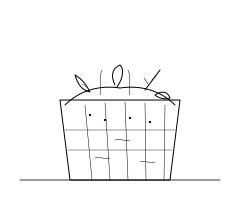
Locally made; from kitchen scraps and palm-frond mulch. The slowest ingredient. Worth the wait.
20% sweet earth
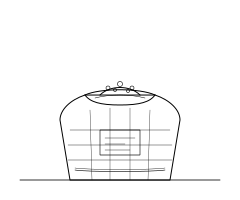
Imported topsoil, bought by the cubic meter. Adds clay and structure. Use sparingly.
10% perlite
For drainage. Without it, sweet earth turns to brick by July. A handful per pot is enough.
Common
questions.
The ones we hear most often, answered briefly. Click any to read.
Can I plant a real lawn in Dubai?
+Why do my plants die in July?
+What about the salt in tap water?
+Can I grow vegetables here?
+How do I deal with sandstorms?
+Is there a best time to plant?
+The garden does not care about your weekend. It cares about the morning.الحديقة لا تنتظر نهاية الأسبوع، إنها تنتظر الفجر.
How a garden
survives July.
In the four hottest months — June through September — the garden is in survival, not growth. Your job changes from gardener to caretaker.
Build the shade.
50% shade cloth over delicate beds. A pergola for the western edge. The shade is more important than the soil.
Water at dawn only.
One watering a day, before sunrise. Twice for pots. Never at noon.
Stop fertilising.
Plants in heat-stress cannot use it; salts will burn the roots. Resume in October.
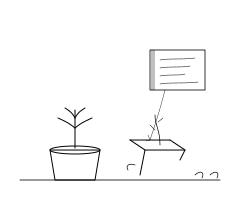
Accept loss.
Some plants will not make it. Note them. Try a tougher cousin in October. The garden is a long conversation.
The architecture
of shade.
A Dubai garden is built shade-first. Four layers, from tallest to smallest, working in conversation to lift the hottest air off your plants and their roots.
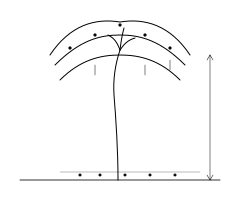
Canopy trees.
Ghaf, neem, or date palm — the first floor. Plant on the western edge to shade the afternoon, and wait.
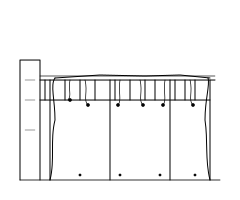
Pergolas & walls.
Anchor a climbing bougainvillea or jasmine against sun-facing walls. Dappled light, softer than cloth.
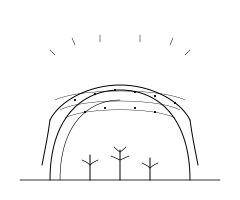
Shade cloth.
Seasonal 50–70% cloth hooped over delicate beds from May through September. Remove in October.
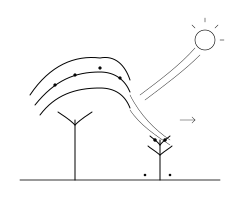
Companion shade.
Tall plants east of small plants borrow morning sun without the afternoon scorch. Plan in pairs.
The four you'll
actually meet.
A hundred pests in the textbooks, four in your garden. Know them by sight, and the rest is patience and neem oil at dusk.
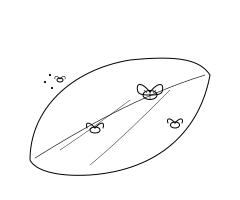
Whitefly.
Clouds of tiny white flies that rise from the underside of leaves. Yellow sticky traps at dawn; neem spray at dusk.
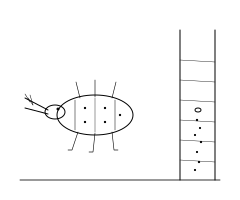
Red palm weevil.
The one that matters. Watch for sawdust at the palm's crown. Call a specialist early — a felled palm can rarely be saved.
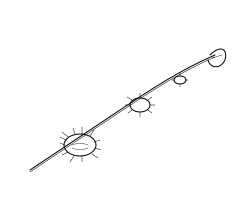
Mealybug.
Cottony tufts at stem joints. Wipe with a cotton bud in alcohol once a week until gone; rotate plants to boost airflow.
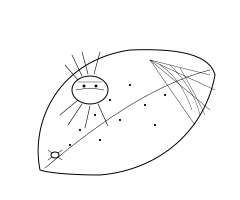
Spider mite.
Stippled leaves and fine webbing. They hate humidity — a mister at dawn is more effective than any spray.
Seven honest
tools.
The desert garden does not need a garage. These seven, chosen patiently, will cover every act between sowing and shade.
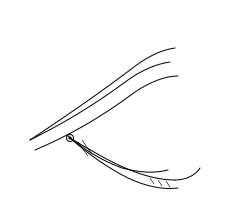
Bypass pruners.
Clean-cut by design — a bruised cut invites disease. Oil the blade weekly through summer.
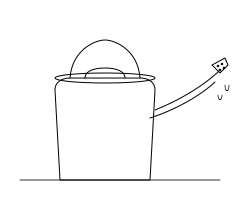
Brass-spout can.
For seedlings and indoor pots. Slow pour, long reach. Brass ages well in our humidity.
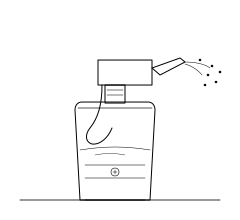
Dawn mister.
A fine pump spray for frangipani, jasmine, and anything sulking in June. Use before the sun.
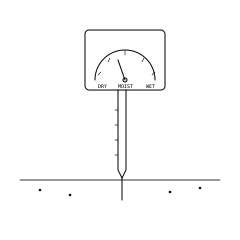
Moisture meter.
Half a year it sits unused. Half a year it settles a marriage. Push it into the soil, not a pot wall.
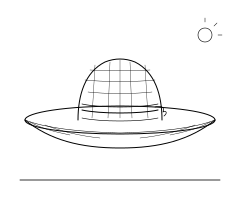
Wide straw hat.
The most important tool in the summer. Your plants will notice when your head is shaded.
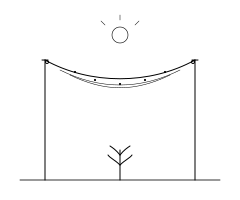
70% shade cloth.
By the metre. Hoop it over tender beds from the first week of May. Store folded; it lasts a decade.
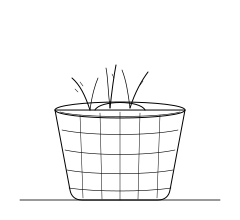
Sa'af basket.
Palm-frond weaving from Al Ain oases — for harvest, cuttings, and the small dignity of a handmade thing.